01 / CHOOSE A PROBLEM
Try a use case
Route support tickets, choose the next action and identify requests for a quote. Demos without an account, with results and code.
Open the use case book →FABRYKA AI RESEARCH
INDEPENDENT ARTIFICIAL INTELLIGENCE RESEARCH LABORATORY · WARSAW, POLAND
We study how language models learn, how to make them more efficient, and how to evaluate them reliably — with a particular focus on Polish-language AI.
Find a use case →Explore Polish models →

NEW MODEL / REMIGIUSZ KINAS / BASAL OMNI 1.0 MAX
Basal Omni is a new 12B decision model built on Gemma 4. Explore applications, author-reported results, experimental media support and integration documentation.
Open weights · PL + EN · Experimental release · Omni hosting in preparation

FABRYKA AI USE CASE BOOK
Try working examples, explore API code and transparent measurements. Meet Basal, Muszka and Poziomka — each with clear authorship and actual availability.
01 / CHOOSE A PROBLEM
Route support tickets, choose the next action and identify requests for a quote. Demos without an account, with results and code.
Open the use case book →02 / MEET THE MODELS
A catalog of model families. Authors, sources, limitations and statuses: available, experimental and listed in the catalog.
Browse the catalog →03 / ADD YOUR PROJECT
Share an example, pilot or deployment. Describe the problem and the result — we will prepare a use case together.
Fabryka AI is an independent service and is not organizationally affiliated with the creators of the featured models or with Hugging Face. Model names, brands and trademarks belong to their respective owners. Catalog inclusion does not imply sponsorship or endorsement of Fabryka by the authors. Model weights come from the authors’ Hugging Face repositories; hosting follows the license of the specific version. Each model card provides its source and license. A model license does not grant trademark rights. Model sources and licenses →
Research → Experiments → Evidence → Applications
01 / RESEARCH PROGRAMMES
How much quality can we achieve with a given budget of data, training and inference — and how can we measure it reliably? These three programmes connect our current work and planned studies.
01 / RESEARCH PROGRAMME
Training Polish language models from scratch. We study scaling laws, tokenizers, data mixtures and distillation to understand how much capability a compact model can learn.
Explore programme →, Small Language Models02 / RESEARCH PROGRAMME
Making language models practical on commodity GPUs. We study quantization, speculative decoding, including DFlash, routing and the trade-offs between throughput, latency and quality.
Explore programme →, Efficient Inference03 / RESEARCH PROGRAMME
Building the data and measurements that Polish AI needs. This programme connects Polish DynaWord, CodeSOTA benchmarks, OCR evaluation and methodologies for comparing Polish LLMs.
Explore programme →, Polish AI Evaluation & Data02 / SELECTED RESEARCH OUTPUTS
Explore public model weights, data and benchmark evidence. Each linked artifact carries its own documentation and scope.
MODEL
A compact language-model release. Model card, weights and usage information are available in the public repository.
DATASET
A public Polish-language dataset supporting our work on language-model training and data composition.
BENCHMARK INFRASTRUCTURE
Model comparisons and benchmark evidence. Individual entries identify their sources and evaluation context.
03 / OPEN RESEARCH
Our research connects questions, baselines, experiments and artifacts. We use Fabryka Track to record training runs, compare configurations and investigate results.
Dated experiment write-ups are preserved in our research notes. Track provides the tools for recording experiments; access to individual runs depends on the project.
04 / RESEARCH INFRASTRUCTURE
Training, measurement and serving are part of the same experimental workflow. We build the infrastructure that helps us investigate each step.
MEASURE
Public infrastructure for model comparisons, benchmark results and evaluation evidence.
Explore CodeSOTA ↗RECORD
Experiment tracking for training runs, metrics, logs, checkpoints and configuration comparisons.
Explore Track ↗EXPERIMENT
GPU systems for training and inference experiments, with hardware and workload conditions documented alongside results.
Inference research →05 / PEOPLE
Meet the Fabryka AI team: researchers, engineers and contributors working across models, data, evaluation, agents and infrastructure.

FOUNDER / RESEARCH
Language models, training infrastructure, model optimization and evaluation.
CO-FOUNDER / RESEARCH & ENGINEERING
Datasets, evaluations, training infrastructure and systems engineering.

AI AGENTS / LLM INFRASTRUCTURE
Founder of Xfaang. Builds autonomous AI agents and LLM products, connecting data, evaluation and infrastructure.

AI AGENTS / RECRUITMENT
Agent teams, web and mobile applications, recruitment and onboarding.
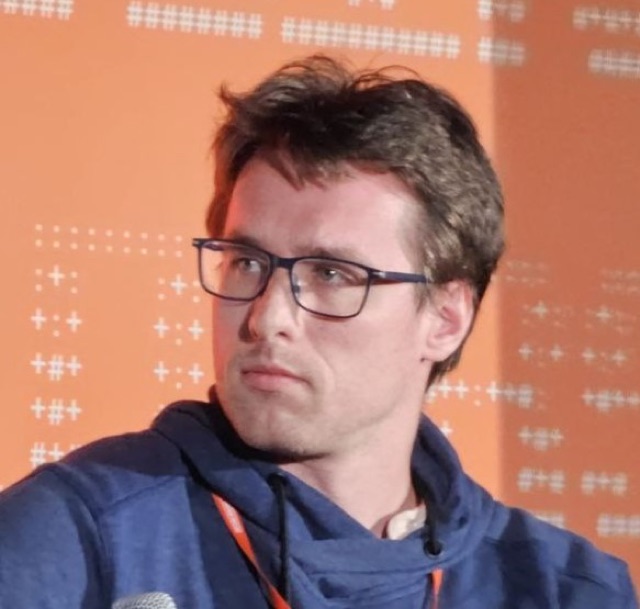
AI ENGINEERING / FULLSTACK
Theoretical physics, computer vision for oncology, and generative and agent systems.
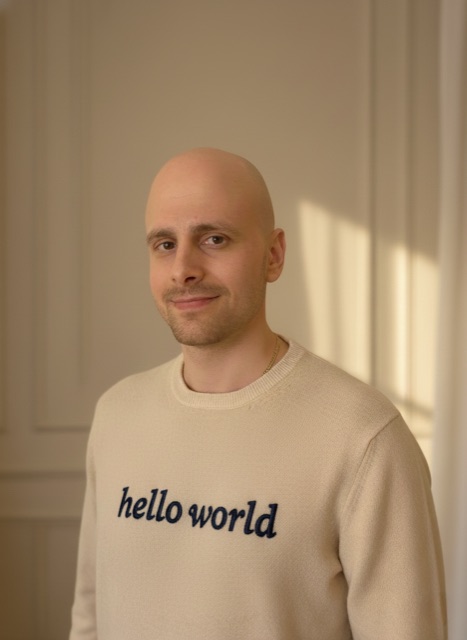
FULLSTACK / MICROSERVICES
Bots, microservices and production tools, from idea to deployment.

AGENT WORKFLOWS / ML STRATEGY
Long-running agent workflows and ML strategies informed by data exploration and visualization.

DATA / SYSTEMS ENGINEERING
Data pipelines, systems engineering and technical planning.
EVALUATION / TOKENIZERS
Evaluation tooling, reproducible experiments and Polish byte-level BPE tokenizers.

RESEARCH TOOLING / COMMUNICATION
Research tooling, experiment documentation and presentations.

TRAINING INFRASTRUCTURE / PRODUCT
Training infrastructure, developer tools and the Fabryka Track interface.
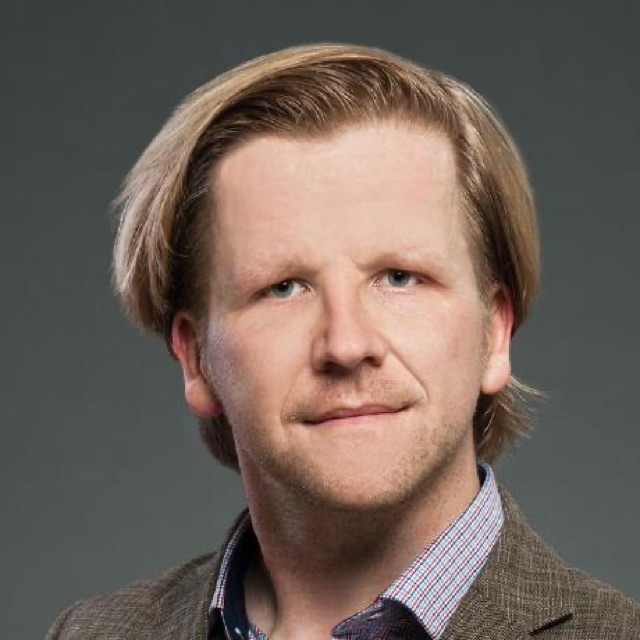
MODEL TRAINING / EVALUATION
Small-model training experiments, model-based evaluation and benchmark methodology.
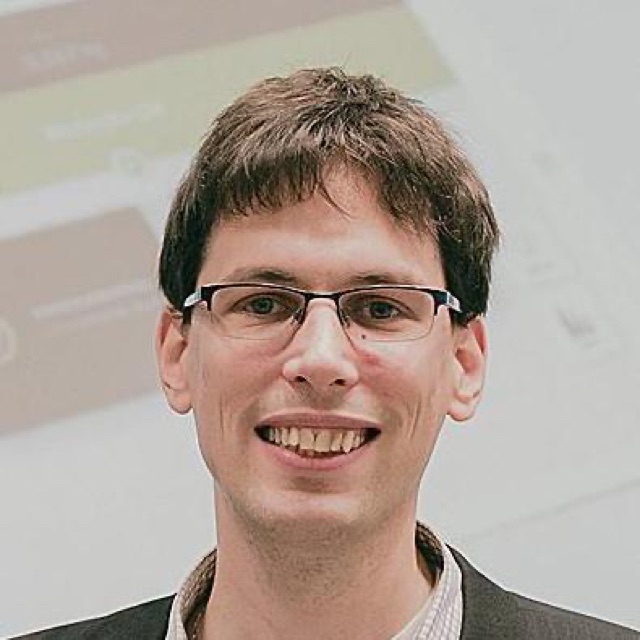
PRODUCT / SOFTWARE ENGINEERING
Software engineering and contributions to the Fabryka Track interface.

TOKENIZERS / TECHNICAL REVIEW
Polish tokenizers, technical reviews and research planning.

RESEARCH REVIEW / PLANNING
Contributions to research discussions, planning and review.
RESEARCH & PRACTICE
Supporting the team with research methodology, evaluation and domain expertise.
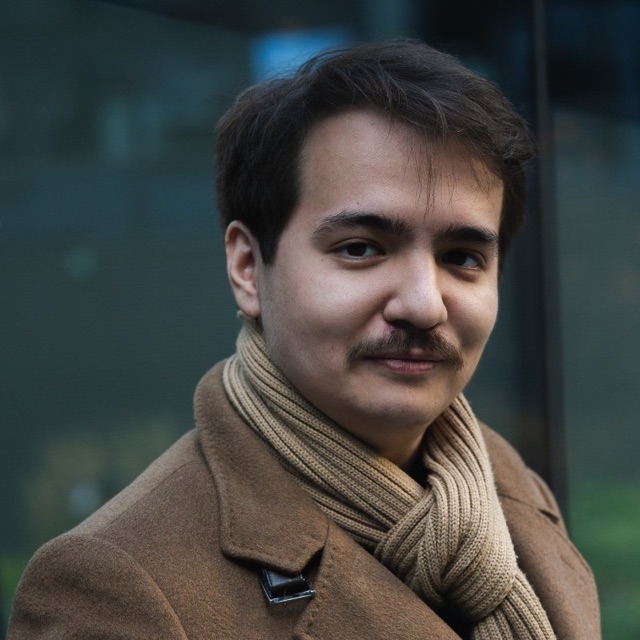
ADVISER / ML RESEARCH
Research expertise in machine learning and language models.
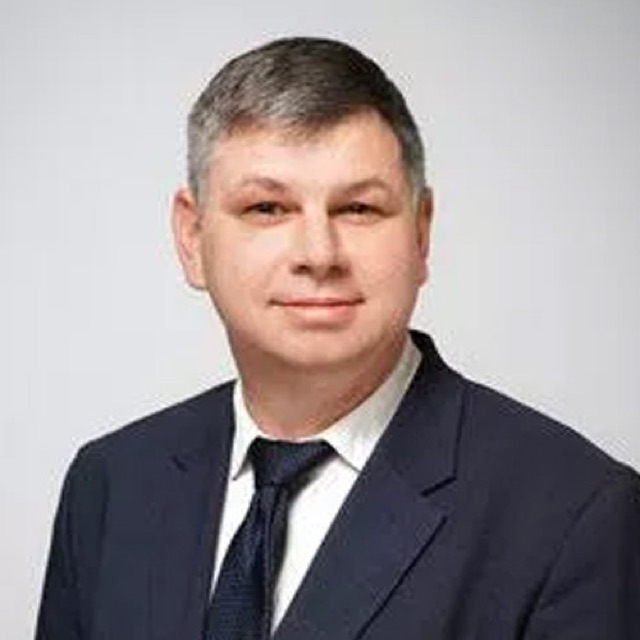
ADVISER / AI & BUSINESS PROCESSES
Expertise in management, business processes and applied AI.
06 / TECHNOLOGY TRANSFER
Selected technologies developed or evaluated at Fabryka become production systems. Our inference platform makes open models available through an API, with tools for chat, routing and token-level analysis.
The platform also serves models developed by other teams. Availability through our API is separate from authorship of a model.
07 / ABOUT FABRYKA AI
Fabryka AI is an independent artificial intelligence research laboratory in Warsaw. We build datasets, train models from scratch and develop methods for efficient inference and reliable evaluation.